
Avantages du boîtier résistant à l’effondrement dans le forage pétrolier et gazier
Matériaux clés utilisés dans la conception du boîtier résistant à l’effondrement
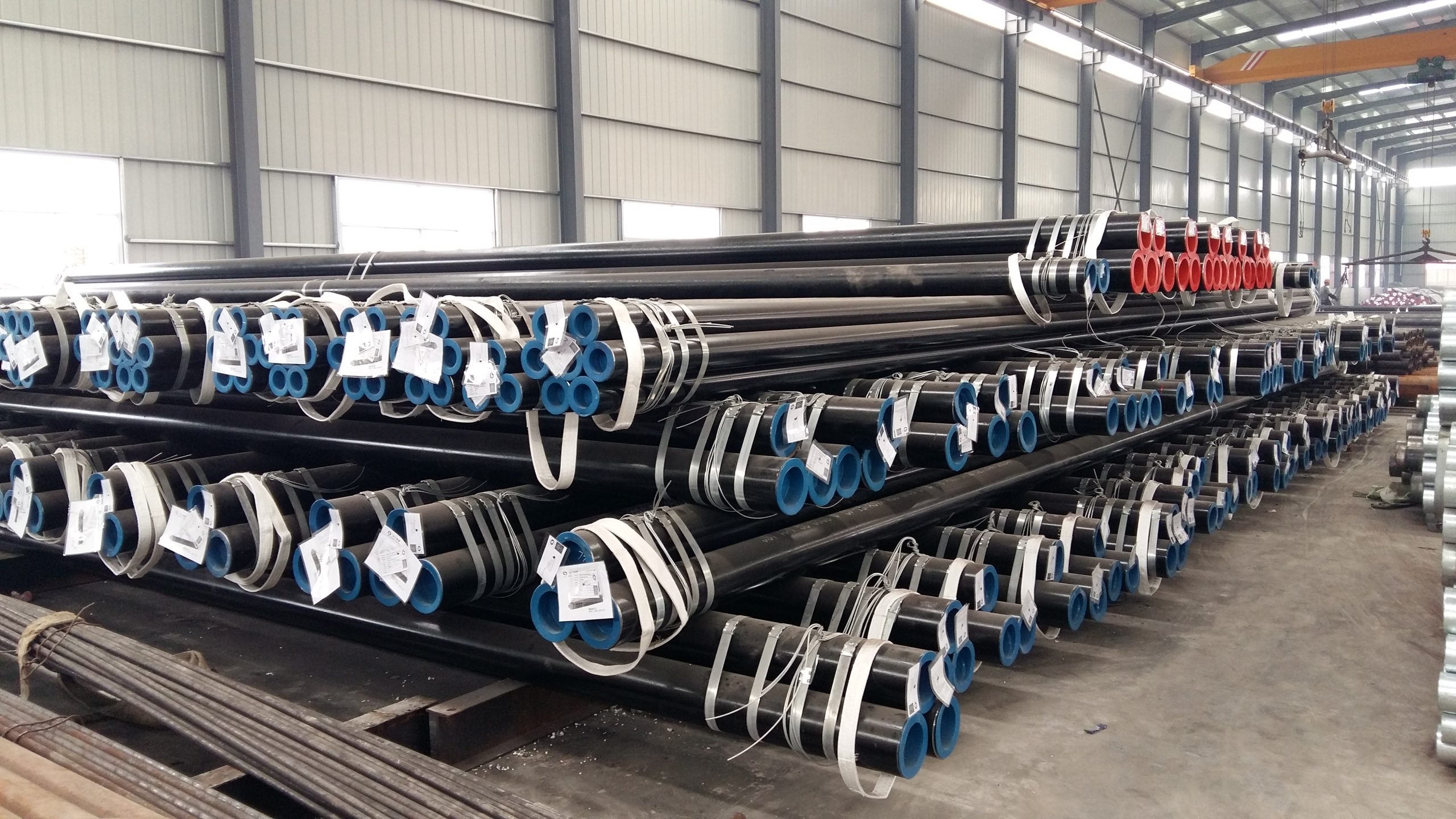
TUYAU DE BOÎTIER DE PÉTROLE Meilleur exportateur chinois
Les alliages d’acier sont les matériaux les plus couramment utilisés dans la conception des boîtiers, principalement en raison de leur haute résistance à la traction et de leur capacité à résister à des pressions externes importantes. La sélection de qualités d’acier spécifiques, telles que les qualités API (American petroleum Institute), est cruciale, car ces qualités sont conçues pour répondre aux exigences des différents environnements de puits. Par exemple, les aciers faiblement alliés à haute résistance (HSLA) sont souvent utilisés dans les puits profonds où le risque d’effondrement est accru en raison de l’augmentation de la pression hydrostatique. De plus, l’utilisation d’alliages résistants à la corrosion peut améliorer la longévité du boîtier, en particulier dans les environnements où des fluides corrosifs sont présents. La combinaison de solidité et de résistance à la dégradation environnementale fait des alliages d’acier un choix privilégié pour les caissons résistants à l’effondrement.
Études de cas : Applications réussies du boîtier résistant à l’effondrement
Le tubage résistant à l’effondrement est devenu une innovation cruciale dans le domaine du forage et de la construction de puits, en particulier dans des environnements géologiques difficiles. L’application de cette technologie a joué un rôle déterminant dans l’amélioration de la sécurité et de l’efficacité des opérations de forage. De nombreuses études de cas illustrent la mise en œuvre réussie d’un caisson résistant à l’effondrement, démontrant ses avantages dans divers secteurs et zones géographiques. Un exemple notable peut être trouvé en mer du Nord, où les opérateurs ont été confrontés à des défis importants en raison des conditions de haute pression et de température élevées qui prévalent dans la région. Dans ce cas, l’utilisation d’un tubage résistant à l’effondrement a permis de forer avec succès des puits en eau profonde, réduisant considérablement le risque de rupture du tubage. L’intégrité structurelle améliorée fournie par ce type de tubage a non seulement assuré la sécurité de l’opération de forage, mais a également minimisé le risque de retards coûteux et de risques environnementaux.
De même, dans les formations de gaz de schiste des États-Unis, les opérateurs se tournent de plus en plus vers l’effondrement. boîtier résistant pour relever les défis uniques posés par ces réservoirs non conventionnels. Le cas d’un opérateur majeur des schistes de Marcellus met en évidence l’efficacité de cette technologie. En utilisant un tubage résistant à l’effondrement, l’opérateur a pu maintenir la stabilité du puits de forage pendant le processus de forage, ce qui est essentiel pour empêcher l’effondrement du puits de forage et garantir la réussite de l’extraction du gaz. Cette application a non seulement amélioré l’efficacité globale de l’opération de forage, mais a également contribué à une réduction des coûts opérationnels, démontrant les avantages économiques de l’adoption de technologies de tubage avancées.
Dans un autre cas, un projet dans le golfe du Mexique a démontré la résilience à l’effondrement. boîtier résistant face à des conditions environnementales extrêmes. Le tubage a été utilisé dans un puits en eau profonde où le risque d’effondrement était accru en raison de la présence de formations géologiques instables. Le déploiement réussi d’un tubage résistant à l’effondrement dans ce scénario a non seulement sauvegardé l’intégrité du puits, mais a également permis l’extraction en toute sécurité des hydrocarbures d’un réservoir auparavant inaccessible. Ce cas souligne la polyvalence du tubage résistant à l’effondrement, car il peut être utilisé efficacement dans une variété d’environnements difficiles, élargissant ainsi le potentiel d’extraction des ressources.
De plus, l’application du tubage résistant à l’effondrement ne se limite pas à l’extraction d’hydrocarbures. Dans le domaine de l’énergie géothermique, un projet en Islande a démontré les avantages de cette technologie pour améliorer la stabilité des puits géothermiques. L’utilisation d’un tubage résistant à l’effondrement dans ce contexte a permis un forage plus profond et une meilleure efficacité d’extraction de chaleur, conduisant finalement à une solution énergétique plus durable. Ce cas illustre les implications plus larges du caisson résistant à l’effondrement au-delà des applications pétrolières et gazières traditionnelles, soulignant son potentiel pour soutenir la transition vers des sources d’énergie renouvelables.
Alors que la demande d’énergie continue de croître, l’importance des technologies innovantes telles que le caisson résistant à l’effondrement ne peut être surestimé. Les applications réussies documentées dans ces études de cas témoignent de l’efficacité de cette technologie pour relever les défis auxquels l’industrie est confrontée. En améliorant la stabilité du puits de forage et en réduisant le risque d’effondrement, le tubage résistant à l’effondrement améliore non seulement l’efficacité opérationnelle, mais contribue également à des pratiques de forage plus sûres et plus durables. À mesure que l’industrie évolue, l’adoption continue de ces technologies avancées sera cruciale pour répondre aux demandes énergétiques du futur tout en minimisant les impacts environnementaux. Les leçons tirées de ces études de cas éclaireront sans aucun doute les projets futurs, ouvrant la voie à de nouveaux progrès dans la technologie et les pratiques de forage.
In recent years, thermoplastics have emerged as an alternative to traditional steel Casing, particularly in applications where weight reduction and Corrosion resistance are critical. materials such as polyvinyl chloride (PVC) and polyethylene (PE) offer significant advantages, including lower density and resistance to chemical attack. These properties make thermoplastics particularly suitable for shallow wells or applications where the risk of collapse is lower. Furthermore, the flexibility of thermoplastic materials allows for easier installation and handling, which can reduce overall project costs. However, it is essential to consider the limitations of thermoplastics, such as their lower mechanical strength compared to steel, which may restrict their use in more demanding environments.
Composite materials, which combine the advantageous properties of different materials, are also gaining traction in the design of collapse resistant casing. These materials typically consist of a polymer matrix reinforced with fibers, such as glass or carbon. The resulting composites exhibit high strength-to-weight ratios, making them ideal for applications where reducing the overall weight of the casing is beneficial. Moreover, composites can be engineered to provide specific performance characteristics, such as enhanced resistance to temperature fluctuations and chemical exposure. As research and development in composite materials continue to advance, their application in collapse resistant casing is expected to expand, offering new solutions for challenging well conditions.
In conclusion, the design of collapse resistant casing relies heavily on the selection of appropriate materials that can withstand the rigors of the well environment. Steel alloys remain the dominant choice due to their strength and durability, while thermoplastics and composite materials offer innovative alternatives that address specific challenges such as weight and corrosion resistance. As the industry evolves and new materials are developed, the focus on enhancing the performance and reliability of collapse resistant casing will continue to be a priority, ensuring the safety and efficiency of well operations in diverse geological settings. The ongoing exploration of material science will undoubtedly lead to further advancements, ultimately contributing to the sustainability and effectiveness of well construction practices.
Case Studies: Successful Applications of Collapse Resistant Casing
Collapse resistant casing has emerged as a pivotal innovation in the field of drilling and well construction, particularly in challenging geological environments. The application of this technology has been instrumental in enhancing the safety and efficiency of drilling operations. Numerous case studies illustrate the successful implementation of collapse resistant casing, showcasing its benefits across various industries and geographical locations. One notable example can be found in the North Sea, where operators faced significant challenges due to the high-pressure and high-temperature conditions prevalent in the region. In this case, the use of collapse resistant casing allowed for the successful drilling of deepwater wells, significantly reducing the risk of casing failure. The enhanced structural integrity provided by this casing type not only ensured the safety of the drilling operation but also minimized the potential for costly delays and environmental hazards.
Similarly, in the shale gas formations of the United States, operators have increasingly turned to collapse resistant casing to address the unique challenges posed by these unconventional reservoirs. The case of a major operator in the Marcellus Shale highlights the effectiveness of this technology. By utilizing collapse resistant casing, the operator was able to maintain wellbore stability during the drilling process, which is critical in preventing the collapse of the wellbore and ensuring the successful extraction of gas. This application not only improved the overall efficiency of the drilling operation but also contributed to a reduction in operational costs, demonstrating the economic advantages of adopting advanced casing technologies.
In another instance, a project in the Gulf of Mexico showcased the resilience of collapse resistant casing in the face of extreme environmental conditions. The casing was employed in a deepwater well where the risk of collapse was heightened due to the presence of unstable geological formations. The successful deployment of collapse resistant casing in this scenario not only safeguarded the integrity of the well but also allowed for the safe extraction of hydrocarbons from a previously inaccessible reservoir. This case underscores the versatility of collapse resistant casing, as it can be effectively utilized in a variety of challenging environments, thereby expanding the potential for resource extraction.
Moreover, the application of collapse resistant casing is not limited to hydrocarbon extraction. In the field of geothermal energy, a project in Iceland demonstrated the benefits of this technology in enhancing the stability of geothermal wells. The use of collapse resistant casing in this context allowed for deeper drilling and improved heat extraction efficiency, ultimately leading to a more sustainable energy solution. This case illustrates the broader implications of collapse resistant casing beyond traditional Oil and Gas applications, highlighting its potential in supporting the transition to renewable energy sources.
As the demand for energy continues to grow, the importance of innovative technologies such as collapse resistant casing cannot be overstated. The successful applications documented in these case studies serve as a testament to the effectiveness of this technology in addressing the challenges faced by the industry. By enhancing wellbore stability and reducing the risk of collapse, collapse resistant casing not only improves operational efficiency but also contributes to safer and more sustainable drilling practices. As the industry evolves, the continued adoption of such advanced technologies will be crucial in meeting the energy demands of the future while minimizing environmental impacts. The lessons learned from these case studies will undoubtedly inform future projects, paving the way for further advancements in drilling technology and practices.