
Applications des tuyaux de tubage d’ingénierie API 5ct grade N80 dans l’industrie pétrolière et gazière
Avantages de l’utilisation d’un tube de tubage technique API 5CT grade N80
Comparaison de la qualité api 5ct n80 avec d’autres qualités de tuyaux de tubage
Le tube de tubage technique API 5CT Grade N80 est un composant crucial dans l’industrie pétrolière et gazière, spécialement conçu pour résister aux conditions exigeantes rencontrées lors des opérations de forage. Lorsque l’on compare l’API 5CT Grade N80 avec d’autres qualités de tubes de tubage, il est essentiel de prendre en compte divers facteurs, notamment les propriétés mécaniques, les applications et les performances globales sur le terrain. L’API 5CT Grade N80 est connue pour sa limite d’élasticité élevée, qui varie généralement de 80 000 psi à 95 000 psi, ce qui la rend adaptée à une utilisation dans des environnements où les pressions et les températures sont élevées. Cette caractéristique le distingue des autres grades, tels que les grades api 5ct J55 et K55, qui ont des limites d’élasticité inférieures et sont plus appropriées pour les applications moins exigeantes.
Entreprises de tubesContrairement au grade N80, le grade J55 a une limite d’élasticité d’environ 55 000. psi, ce qui le rend moins capable de gérer les conditions extrêmes souvent rencontrées dans les puits plus profonds. Bien que le J55 puisse convenir aux opérations de forage peu profond, il n’a pas la robustesse requise pour les environnements à haute pression, ce qui peut entraîner des pannes potentielles et des temps d’arrêt coûteux. De même, le grade K55, avec une limite d’élasticité d’environ 65 000 psi, est également inférieur au N80. Bien que le K55 puisse être utilisé dans des applications à pression modérée, il n’offre pas le même niveau d’assurance et de fiabilité que le N80 dans des scénarios plus difficiles.
Un autre aspect important à prendre en compte est la composition matérielle de ces qualités de boîtier. L’API 5CT Grade N80 est généralement fabriqué à partir d’une teneur en alliage plus élevée, ce qui améliore sa résistance à la corrosion et à l’usure. Ceci est particulièrement bénéfique dans les environnements où la présence de sulfure d’hydrogène ou d’autres éléments corrosifs est préoccupante. En revanche, les qualités J55 et K55 peuvent ne pas offrir le même niveau de protection contre ces agents corrosifs, ce qui pourrait entraîner une défaillance prématurée du tube de tubage. Par conséquent, lors de la sélection d’une qualité d’enveloppe pour une application spécifique, il est essentiel d’évaluer les conditions environnementales et de choisir une qualité capable de résister à ces défis.
De plus, les processus de fabrication de ces qualités d’enveloppe jouent également un rôle important dans leurs performances. L’API 5CT Grade N80 peut être produit sous deux formes différentes : N80-1 et N80-Q. La variante N80-Q subit un traitement thermique supplémentaire, qui améliore encore ses propriétés mécaniques et la rend plus adaptée aux applications à contraintes élevées. Cette distinction est cruciale pour les opérateurs qui ont besoin d’une solution de tubage fiable, capable de supporter les rigueurs du forage de puits profonds. En comparaison, J55 et K55 ne présentent pas de telles variations, ce qui peut limiter leur adaptabilité à des exigences opérationnelles spécifiques.
En résumé, la comparaison de l’API 5CT Grade N80 avec d’autres qualités de tubes de tubage, telles que J55 et K55, met en évidence la supériorité mécanique propriétés et composition du matériau du N80. Sa limite d’élasticité élevée, sa résistance à la corrosion et son adaptabilité aux conditions extrêmes en font un choix privilégié pour de nombreuses opérations de forage. Bien que les J55 et K55 puissent fonctionner correctement dans des environnements moins exigeants, ils n’offrent pas le même niveau de fiabilité et de performances que l’API 5CT Grade N80. Par conséquent, la sélection de la qualité de tubage appropriée est essentielle pour garantir le succès et la sécurité des opérations de forage, ce qui a un impact ultime sur l’efficacité et la productivité globales de l’extraction de pétrole et de gaz.
Another significant advantage of using API 5CT Grade N80 engineered Casing Pipe is its compliance with industry standards. The API (American petroleum Institute) sets rigorous specifications for casing pipes, ensuring that they meet the necessary safety and performance criteria. By utilizing N80 Casing pipe, operators can be confident that they are adhering to these standards, which not only enhances the safety of their operations but also fosters trust among stakeholders, including investors and regulatory bodies. This compliance is essential in maintaining a positive reputation within the industry and can facilitate smoother project approvals and operations.
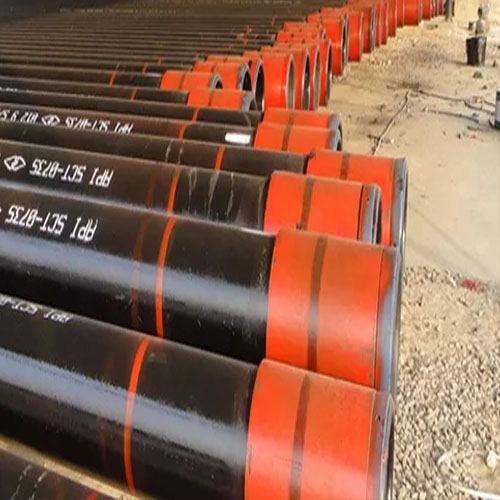
Furthermore, the installation process of API 5CT Grade N80 casing pipe is relatively straightforward, which can lead to reduced operational downtime. The engineered design of the pipe allows for efficient handling and installation, minimizing the time required to set up the casing in the well. This efficiency is particularly beneficial in the fast-paced Oil and gas sector, where time is often of the essence. By streamlining the installation process, operators can focus on maximizing production and minimizing delays, ultimately enhancing their overall productivity.
In conclusion, the advantages of using API 5CT Grade N80 engineered casing pipe are manifold, encompassing strength, Corrosion resistance, versatility, compliance with industry standards, and ease of installation. These attributes make it an invaluable asset in the oil and gas industry, where the demands of drilling operations require reliable and durable solutions. As the industry continues to evolve, the importance of high–quality casing materials like API 5CT Grade N80 will remain paramount in ensuring the safety, efficiency, and sustainability of oil and gas extraction processes.
Comparison of API 5CT Grade N80 with Other Casing pipe grades
API 5CT Grade N80 engineered casing pipe is a crucial component in the oil and gas industry, specifically designed to withstand the demanding conditions encountered during drilling operations. When comparing API 5CT Grade N80 with other casing pipe grades, it is essential to consider various factors, including mechanical properties, applications, and overall performance in the field. API 5CT Grade N80 is known for its high yield strength, which typically ranges from 80,000 psi to 95,000 psi, making it suitable for use in environments where high pressure and temperature are prevalent. This characteristic sets it apart from other grades, such as API 5CT Grade J55 and K55, which have lower yield strengths and are more appropriate for less demanding applications.
Tubing CompaniesIn contrast to Grade N80, Grade J55 has a yield strength of approximately 55,000 psi, making it less capable of handling the extreme conditions often encountered in deeper wells. While J55 may be adequate for shallow drilling operations, it lacks the robustness required for high-pressure environments, which can lead to potential failures and costly downtime. Similarly, Grade K55, with a yield strength of around 65,000 psi, also falls short when compared to N80. Although K55 can be used in moderate pressure applications, it does not provide the same level of assurance and reliability as N80 in more challenging scenarios.
Another important aspect to consider is the material composition of these casing grades. API 5CT Grade N80 is typically manufactured from a higher alloy content, which enhances its resistance to corrosion and wear. This is particularly beneficial in environments where the presence of hydrogen sulfide or other corrosive elements is a concern. In contrast, Grades J55 and K55 may not offer the same level of protection against such corrosive agents, potentially leading to premature failure of the casing pipe. Therefore, when selecting a casing grade for a specific application, it is vital to assess the environmental conditions and choose a grade that can withstand those challenges.
Furthermore, the manufacturing processes for these casing grades also play a significant role in their performance. API 5CT Grade N80 can be produced in two different forms: N80-1 and N80-Q. The N80-Q variant undergoes additional heat treatment, which further enhances its mechanical properties and makes it more suitable for high-stress applications. This distinction is crucial for operators who require a reliable casing solution that can endure the rigors of deep well drilling. In comparison, J55 and K55 do not have such variations, which may limit their adaptability to specific operational requirements.
In summary, the comparison of API 5CT Grade N80 with other casing pipe grades, such as J55 and K55, highlights the superior mechanical properties and material composition of N80. Its high yield strength, resistance to corrosion, and adaptability to extreme conditions make it a preferred choice for many drilling operations. While J55 and K55 may serve adequately in less demanding environments, they do not provide the same level of reliability and performance as API 5CT Grade N80. Consequently, selecting the appropriate casing grade is essential for ensuring the success and safety of drilling operations, ultimately impacting the overall efficiency and productivity of oil and gas extraction.